The Infrastructure of Code: A Complete Guide to Repositories for Languages, Frameworks, and Compilers
- Why Inspect Foundational Repositories?
- Part 1: Compilers, Runtimes, and Virtual Machines
- Part 2: Systems & Low-Level Programming Languages
- Part 3: Managed, Enterprise, and Dynamic Languages
- Part 4: Frontend Web Frameworks & Libraries
- Part 5: Backend & Full-Stack Application Frameworks
- Part 6: Source Repositories vs. Package Registries
- Part 7: Navigating and Contributing to High-Scale Infrastructure Repositories
- Conclusion: The Bookmarkable Value of Code Infrastructure
- Directory Quick-Reference Summary
- Repositories for common programming languages, frameworks, and compilers
Every line of modern software—from high-frequency trading algorithms to mobile applications—rests on an interconnected matrix of foundational technologies. At the root of this stack are programming languages, compilers, language runtimes, and application frameworks.
While millions of developers use tools like npm, pip, cargo, or apt every day to pull down dependencies, fewer take time to inspect the underlying source code repositories that make their software possible. Understanding where these foundational projects live, how their codebases are structured, and how their core maintainers manage governance is a superpower for senior software engineers, system architects, and technical leaders.
This comprehensive guide maps out the source code repositories for the world’s most critical programming languages, compilers, runtimes, and frameworks. Whether you want to debug deep framework abstractions, perform security audits, or contribute directly to the tools powering modern computing, this directory serves as your ultimate blueprint.
Why Inspect Foundational Repositories?
Before diving into the directory, it is worth examining why navigating core repositories matters for software engineers and engineering management:
- Definitive Ground Truth: Documentation can be outdated, incomplete, or ambiguous. Source code is the absolute authority on how a compiler optimizes a loop, how a garbage collector reclaims memory, or how a web framework handles concurrent HTTP requests.
- Security Auditing and Software Supply Chain Defense: Software supply chain attacks continue to escalate. Understanding the origin, build infrastructure, and signing mechanisms of core tools helps organizations evaluate zero-day risks and dependency vulnerabilities.
- Advanced Performance Tuning: High-performance engineering often requires peering past high-level abstractions down to the compiler, runtime engine, or Virtual Machine (VM) level.
- Architectural Mastery: Studying repositories maintained by world-class software architects reveals elite software design patterns, monorepo management, automated testing strategies, and cross-platform build systems.
Part 1: Compilers, Runtimes, and Virtual Machines
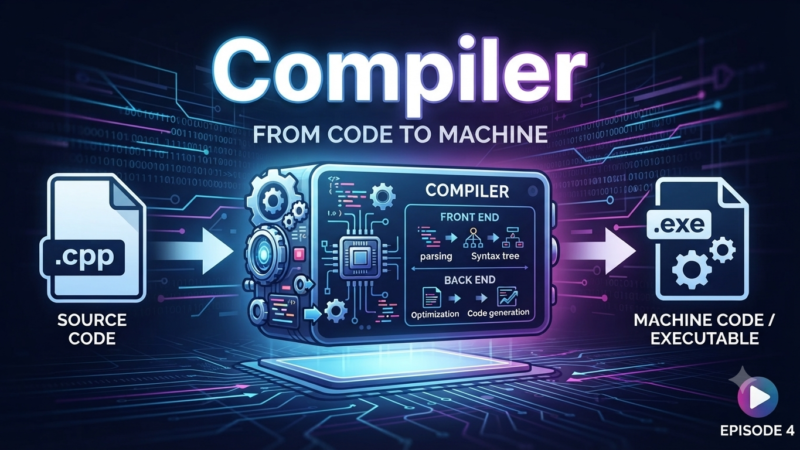
Compilers and runtimes convert human-readable source code into machine instructions or target bytecodes. The repositories housing these systems represent some of the most sophisticated engineering achievements in computer science history.
       ┌────────────────────────────────────────────────────────┐
       │               High-Level Language Source               │
       └───────────────────────────┬────────────────────────────┘
                                   │
                                   ▼
       ┌────────────────────────────────────────────────────────┐
       │       Compiler Front-End (e.g., Clang, rustc)          │
       └───────────────────────────┬────────────────────────────┘
                                   │
                                   ▼
       ┌────────────────────────────────────────────────────────┐
       │ Intermediate Representation / IR Optimization (LLVM)   │
       └───────────────────────────┬────────────────────────────┘
                                   │
                                   ▼
       ┌────────────────────────────────────────────────────────┐
       │     Target Architecture Machine Code (x86, ARM, RISC-V) │
       └────────────────────────────────────────────────────────┘
1. The LLVM Compiler Infrastructure
LLVM is a modular, reusable compiler and toolchain technology that powers backends for Rust, Swift, Clang (C/C++), Julia, and many other languages.
- Primary Repository: llvm/llvm-project (GitHub)
- Architecture: Monorepo containing LLVM Core, Clang, LLD (linker), LLDB (debugger), libc++, and MLIR.
- Primary Language: C++
- Key Directory Structure:
/llvm– Core libraries, target code generators, and optimization passes./clang– Frontend for C, C++, Objective-C, and OpenCL./lld– High-performance linker targeting ELF, PE/COFF, and Mach-O.
2. GNU Compiler Collection (GCC)
GCC remains a cornerstone of Linux ecosystems and embedded platforms, providing production-grade compilers for C, C++, Fortran, Go, and Ada.
- Primary Repository: git.savannah.gnu.org/git/gcc.git (Official Sourceware Git / Read-only mirror on GitHub at
gcc-mirror/gcc) - Architecture: Traditional Git monorepo separated by language frontends and target architectures.
- Primary Language: C, C++
- Governance: GNU Project / Free Software Foundation (FSF).
3. V8 JavaScript & WebAssembly Engine
V8 is Google’s open-source high-performance JavaScript and WebAssembly engine, written in C++. It powers Google Chrome, Node.js, and Deno.
- Primary Repository: chromium.googlesource.com/v8/v8 (Official Git / Mirror at
v8/v8on GitHub) - Architecture: Includes the Ignition interpreter and TurboFan optimizing compiler pipeline.
- Primary Language: C++
4. OpenJDK (Java Development Kit)
OpenJDK is the open-source implementation of the Java Platform, Standard Edition (Java SE).
- Primary Repository: openjdk/jdk (Migrated from Mercurial to GitHub via Project Skara)
- Architecture: Monorepo hosting the HotSpot Virtual Machine, standard class libraries, and Java compiler (
javac). - Primary Language: C++, Java
- Key Directory Structure:
/src/hotspot– C++ implementation of the HotSpot VM (JIT compiler, garbage collectors)./src/java.base– The core Java modules (java.lang,java.util,java.io).
Summary: Key Compiler & Runtime Repositories
| Project / Tool | Target Ecosystem | Primary Host Platform | License Type | Key Architectural Feature |
|---|---|---|---|---|
| LLVM | Multi-language Backend | GitHub | Apache 2.0 with LLVM Exception | Intermediate Representation (IR) Pipeline |
| GCC | C/C++, Fortran, Go | Sourceware Git | GPLv3+ | Ubiquitous hardware target support |
| V8 | JavaScript / Wasm | Google Source / GitHub | BSD-3-Clause | Ignition Interpreter + TurboFan JIT |
| OpenJDK | Java, Kotlin, Scala | GitHub | GPLv2 with Classpath Exception | HotSpot VM & Pluggable GCs (ZGC/G1) |
| .NET Runtime | C#, F#, VB.NET | GitHub | MIT License | CoreCLR VM & RyuJIT Compiler |
Part 2: Systems & Low-Level Programming Languages
Systems languages form the low-level foundation for operating systems, game engines, database systems, and cloud infrastructure.
                  ┌─────────────────────────────────┐
                  │   Systems Languages Ecosystem   │
                  └────────────────┬────────────────┘
                                   │
         ┌─────────────────────────┼─────────────────────────┐
         ▼                         ▼                         ▼
   ┌───────────┐             ┌───────────┐             ┌───────────┐
   │ C and C++ │             │   Rust    │             │    Go     │
   └─────┬─────┘             └─────┬─────┘             └─────┬─────┘
         │                         │                         │
         ▼                         ▼                         ▼
 ISO / WG21 Standards       rust-lang/rust             golang/go
 Mirrors & GNU GCC          (GitHub Monorepo)          (Custom Git Engine)
1. C and C++
Because C and C++ are standardized by ISO committees (WG14 and WG21, respectively), there is no single source repository for “C” or “C++” as abstract languages. Instead, source code resides in compiler runtimes and standard library implementations:
- LLVM libc++:
llvm/llvm-project(/libcxxdirectory) - GNU libstdc++:
gcc-mirror/gcc(/libstdc++-v3directory) - Microsoft STL: microsoft/STL – The fully open-sourced implementation of the C++ Standard Library used by MSVC.
2. The Rust Language
Rust’s compiler toolchain (rustc), standard library (std), and package manager core (cargo) live together in a single tightly integrated community repository.
- Primary Repository: rust-lang/rust
- Architecture: Monorepo compiled via
bootstrap(a Python/Rust build orchestration tool). - Primary Language: Rust (bootstrapped self-hosting compiler).
- Key Directory Structure:
/compiler– Rustc compiler internals (HIR, MIR, codegen backends)./library– Core, alloc, and standard libraries (std)./src/tools– Supporting tools likeclippy,rustfmt, andmiri.
3. The Go Language (Golang)
Go’s repository is maintained by the Go core team at Google and open-source contributors. The language compiler was originally written in C, but was completely rewritten in Go (self-hosting) in Go 1.5.
- Primary Repository: go.googlesource.com/go (Official / Mirror at
golang/goon GitHub) - Architecture: Minimalist directory hierarchy enforcing strict language design principles.
- Primary Language: Go
- Key Directory Structure:
/src/cmd/compile– The internal Go compiler./src/runtime– Garbage collector, goroutine scheduler, and memory allocator./src– Standard library packages (http,json,sync).
Part 3: Managed, Enterprise, and Dynamic Languages
Dynamic and enterprise-tier managed languages balance high-level developer ergonomics with safety, concurrency, and rich standard libraries.
1. CPython (Python Reference Implementation)
Python is standardized through Python Enhancement Proposals (PEPs). The canonical reference implementation is CPython.
- Primary Repository: python/cpython
- Primary Language: C (Core runtime) and Python (Standard library modules).
- Key Directory Structure:
/Python– The CPython C-API, bytecode interpreter engine, and evaluation loop (ceval.c)./Objects– Built-in Python types implemented in C (dictobject.c,listobject.c)./Lib– Python standard library written directly in pure Python.
2. Node.js & TypeScript (JavaScript Ecosystem)
While JavaScript’s language specification (ECMAScript / ECMA-262) is managed by the TC39 committee on GitHub at tc39/ecma262, its real-world implementation relies on runtime engines and supersets.
Node.js Runtime
- Primary Repository: nodejs/node
- Key Stack Integration: Binds Google’s V8 engine with
libuv(asynchronous event loop) and OpenSSL.
Microsoft TypeScript
- Primary Repository: microsoft/TypeScript
- Primary Language: TypeScript (Self-hosting compiler
tsc).
3. Ruby (CRuby / MRI)
Matz’s Ruby Interpreter (MRI) or CRuby is the canonical reference implementation of the Ruby programming language.
- Primary Repository: ruby/ruby
- Primary Language: C
- Key Component: YARV (Yet Another Ruby VM), which executes compiled Ruby bytecode.
4. PHP (PHP: Hypertext Preprocessor)
PHP’s language core is driven by the Zend Engine, which parses, compiles, and executes PHP code.
- Primary Repository: php/php-src
- Primary Language: C
- Key Directory Structure:
/Zend– The Zend Engine source code (execution, lexical analysis, garbage collection)./ext– Core extensions (e.g.,mysqli,curl,json,pcre).
5. Swift (Apple Ecosystem)
Swift is a powerful, open-source systems programming language developed by Apple and the open-source community.
- Primary Repository: swiftlang/swift
- Primary Language: C++, Swift
- Key Component: Leverages LLVM as its compilation backend and integrates SIL (Swift Intermediate Language) for domain-specific static analysis.
6. Kotlin (JetBrains)
Kotlin is a modern language targeting the JVM, Android, Native (LLVM), and JavaScript.
- Primary Repository: JetBrains/kotlin
- Primary Language: Java, Kotlin
Part 4: Frontend Web Frameworks & Libraries
Modern client-side web application development relies on component-driven framework ecosystems.
┌────────────────────────────────────────────────────────────────────────┐
│                   Modern Web Framework Ecosystems                      │
└────────────────────────────────────────────────────────────────────────┘
       │                                   │                           │
       ▼                                   ▼                           ▼
┌──────────────┐                  ┌─────────────────┐         ┌────────────────┐
│ React (Meta) │                  │ Vue.js (Core)   │         │ Angular (Google)│
├──────────────┤                  ├─────────────────┤         ├────────────────┤
│ Virtual DOM  │                  │ Reactive Proxy  │         │ Incremental DOM│
│ JSX Compiler │                  │ SFC Compiler    │         │ RxJS Signals   │
└──────┬───────┘                  └────────┬────────┘         └────────┬───────┘
       │                                   │                           │
       └───────────────────────────────────┴───────────────────────────┘
                                           │
                                           ▼
                       ┌──────────────────────────────────────┐
                       │  Package Registries (npm / JSR)      │
                       └──────────────────────────────────────┘
1. React (Meta Core Team)
React is an open-source JavaScript library for building user interfaces based on reactive component trees.
- Primary Repository: facebook/react
- Monorepo Packages:
packages/react– Isomorphic core React APIs (useState,useEffect,useContext).packages/react-dom– Rendering engine for the web browser DOM.packages/react-reconciler– Fiber reconciliation engine managing async updates.
2. Vue.js (Vue Core)
Vue 3 features a completely rewritten TypeScript core powered by Proxy-based reactivity.
- Primary Repository: vuejs/core
- Monorepo Packages:
@vue/reactivity– Standalone reactive state tracking system.@vue/compiler-sfc– Compiler for Single File Components (.vuefiles).@vue/runtime-dom– DOM rendering target engine.
3. Angular (Google)
Angular is Google’s enterprise cross-platform framework, shipped as a comprehensive monorepo containing everything from routing to forms and reactive signals.
- Primary Repository: angular/angular
- Primary Language: TypeScript
- Key Architecture: Utilizes the Ivy compilation engine and reactive signal graph scheduling.
4. Svelte
Svelte radically departs from traditional Virtual DOM approaches by shifting UI reactivity processing into a compile-time build step.
- Primary Repository: sveltejs/svelte
- Primary Language: TypeScript / JavaScript
Part 5: Backend & Full-Stack Application Frameworks
Backend frameworks provide structural foundations for web applications, offering abstractions for HTTP handling, object-relational mapping (ORM), state persistence, and API design.
1. Spring Boot (Java Ecosystem)
Spring Boot provides the opinionated core for microservices built on top of the enterprise Spring Framework.
- Primary Repositories:
- Core Framework: spring-projects/spring-framework
- Spring Boot Core: spring-projects/spring-boot
- Primary Language: Java
2. Django (Python Ecosystem)
Django is Python’s premier high-level web framework, famous for its “batteries-included” architecture.
- Primary Repository: django/django
- Primary Language: Python
- Key Component Structure:
django/db– Object-Relational Mapper (ORM) engine supporting multiple database drivers.django/contrib– Included administrative interface, authentication modules, and session engines.
3. ASP.NET Core (Microsoft .NET Ecosystem)
ASP.NET Core is Microsoft’s high-performance, cross-platform open-source web framework.
- Primary Repository: dotnet/aspnetcore
- Primary Language: C#
- Performance Note: ASP.NET Core regularly ranks as one of the fastest web frameworks on TechEmpower benchmarks due to optimized low-level networking primitives (
System.IO.Pipelines).
4. Ruby on Rails (Rails Core)
Rails is the pioneering model-view-controller (MVC) framework designed for developer happiness and rapid prototyping.
- Primary Repository: rails/rails
- Primary Language: Ruby
- Key Monorepo Components:
activerecord(database handling),actionpack(routing & controllers), andactivesupport(utility extensions).
5. Laravel (PHP Ecosystem)
Laravel is PHP’s most widely adopted web framework, offering expressive syntax and modern application tooling.
- Primary Repository: laravel/framework
- Primary Language: PHP
Part 6: Source Repositories vs. Package Registries
When tracking modern software tooling, it is essential to distinguish between Source Code Repositories and Package Registries.
   Developer Desktop / CI CD Environment
  │
  ├──► Pulls Source Code via Git ─────► GitHub / GitLab Source Repositories
  │                                     (Human-readable C++, Rust, Python)
  │
  └──► Fetches Compiled Assets ───────► Package Registries (npm, PyPI, Crates.io)
                                        (Tarballs, Wheels, Binaries, Jars)
| Domain / Stack | Source Repository (Where Code is Written) | Package Registry (Where Artifacts are Hosted) |
|---|---|---|
| JavaScript / Node | GitHub (facebook/react) | npm (npmjs.com) / JSR |
| Python | GitHub (python/cpython) | PyPI (pypi.org) |
| Rust | GitHub (rust-lang/rust) | Crates.io |
| Java | GitHub (openjdk/jdk) | Maven Central / Sonatype |
| .NET | GitHub (dotnet/runtime) | NuGet (nuget.org) |
| Go | Custom Git Source Host | Go Proxy / Direct Git Tags (proxy.golang.org) |
Supply Chain Security: The Registry Risk Factor
Package registries host pre-compiled assets, tarballs, or built artifacts. Attackers frequently execute typosquatting or dependency confusion attacks against package registries.
Inspecting and auditing the corresponding upstream source repository—along with verifying commit signatures via Git GPG/SSH verification—is a critical defense strategy for enterprise platform engineering teams.
Part 7: Navigating and Contributing to High-Scale Infrastructure Repositories
Contributing to or inspecting massive infrastructure codebases can feel intimidating. Repositories like llvm-project or rust-lang/rust contain millions of lines of code. Here is how senior engineers efficiently navigate these environments:
1. Leverage Dedicated Code Navigation Engine Indexing
Standard GitHub search often falls short when searching large repositories across commit histories. Use advanced code navigation engines:
- Sourcegraph: Cross-repository precise code intelligence (Jump-to-definition, find-references).
- Rust Analyzer: Integrated via Language Server Protocol (LSP) locally for deep Rust framework introspection.
- OpenGrok: Search engine developed by Oracle specifically optimized for massive source trees like OpenJDK and Solaris.
2. Follow Language Evolution RFC Processes
Before code hits a compiler or language standard library repository, it undergoes formal review. To track future changes before they land in master branches, monitor RFC (Request for Comments) repositories:
- Python PEPs: python/peps
- Rust RFCs: rust-lang/rfcs
- Swift Evolution: apple/swift-evolution
- ECMAScript Standards: tc39/proposals
┌─────────────────────────┐     ┌─────────────────────────┐     ┌─────────────────────────┐
│     Community Proposal   │    │  Formal Specification   │    │ Merge Code into Master  │
│  (e.g., Rust RFC / PEP)  ├───►│ (Steering Team Review)  ├───►│ (Compiler / Framework)  │
└─────────────────────────┘     └─────────────────────────┘     └─────────────────────────┘
3. Study Monorepo Build Configurations
Analyzing how infrastructure repos build code teaches you advanced build system mechanics:
- LLVM: Uses
CMakeandNinjato orchestrate builds across platforms. - Rust: Uses
x.py(a custom bootstrap Python wrapper) drivingcargointernally. - Bazel: Used internally by Google for massive monorepos, including parts of the Angular ecosystem.
Conclusion: The Bookmarkable Value of Code Infrastructure
The world runs on open-source code. When you look under the hood of your web frame, database driver, or language compiler, abstractions fade away. You discover that even the most complex tools are composed of standard design patterns, C++ functions, Rust traits, dynamic memory management, and well-structured algorithms.
Understanding the locations, structures, and governance models of these foundational repositories equips software engineers with deep technical clarity. Bookmark this directory, inspect the tools you use every day, and consider giving back to the global technical community through code reviews, documentation updates, and open-source contributions.
Directory Quick-Reference Summary
- LLVM Core: https://github.com/llvm/llvm-project
- GCC Compiler: https://gcc.gnu.org/git/gcc.git
- Rust System: https://github.com/rust-lang/rust
- Go System: https://go.googlesource.com/go
- CPython (Python): https://github.com/python/cpython
- OpenJDK (Java): https://github.com/openjdk/jdk
- .NET Core Runtime: https://github.com/dotnet/runtime
- V8 Engine: https://chromium.googlesource.com/v8/v8
- React Web Framework: https://github.com/facebook/react
- Spring Framework: https://github.com/spring-projects/spring-framework
Repositories for common programming languages, frameworks, and compilers
- C# / .NEThttps://github.com/dotnet
- D: a statically typed general-purpose language designed primarily for systems programming https://github.com/dlang
- Darthttps://github.com/dart-lang
- Gohttps://github.com/golang/(Fork of Go from Microsoft: https://github.com/microsoft/go/ )
- Java / JDK https://github.com/openjdk/jdkLatest version: https://github.com/openjdk/jdk21
- Juliahttps://github.com/JuliaLang/julia
- Kotlinhttps://github.com/Kotlin
- Lean (a language with a strong emphasis on mathematics)https://github.com/leanprover/lean4
- Mojo (a language that aims to provide an alternative to Python, has a similar syntax, is compatible with Python, but offers greater performance)https://github.com/modularml/mojo
- Nimhttps://github.com/nim-lang/Nim
- OCaml: A functional, statically typed language from the ML family of languages; it provides a modular system coupled with an object-oriented, class-based approach.https://github.com/ocaml/ocaml
- Odinhttps://github.com/odin-lang/Odin
- PHPhttps://github.com/php/php-src
- Rubyhttps://github.com/ruby/ruby
- Rusthttps://github.com/rust-lang/rust
- Perlhttps://github.com/Perl/perl5
- Swifthttps://github.com/swiftlang
- V8 JavaScript Enginehttps://github.com/v8/v8
- Vhttps://github.com/vlang/
- Valhttps://github.com/val-lang/val
- Zighttps://github.com/ziglang/zig
- Racket: A general-purpose, cross-platform language for a wide variety of tasks—web applications, systems programming, network applications, and graphical applications. It’s more similar to functional languages, but as stated on the Racket website, it’s a “Language-Oriented Programming Language.”https://github.com/racket/racket/
- HaareA systems programming language similar to C, but simpler than C.The language utilizes manual memory management and static typing. It is optimized for low-level tasks (development of operating systems, compilers, network applications, and system utilities that require maximum performance and full execution control). A minimal runtime environment is attached for application execution, and a standard library of functions is distributed for development. This library provides access to the operating system’s core interfaces and offers functions for working with common algorithms, protocols, and formats.
- Reasonhttps://github.com/reasonml/reason
- Grainhttps://github.com/grain-lang/grain
- Guile: A free implementation of the Scheme functional programming language that supports embedding code into applications written in other programming languages.https://www.gnu.org/software/guile/download/#repository
- Unicon: A cross-platform, high-level programming language that evolved from the Icon language.https://github.com/uniconproject/unicon
- Cheerp – C/C++ code compiler to WebAssembly or JavaScripthttps://github.com/leaningtech/cheerp-compiler
- jsii: A modification of the TypeScript compiler that enables the creation of class libraries in TypeScript that can be used in C#, Go, Java, and Python projects by translating them into native modules for those languages that provide the same API.https://github.com/aws/jsii
- Fable: F # to JavaScript, TypeScript, Python, Rust, and Dart compilerhttps://github.com/fable-compiler/fable
- PRQL: a language for simplifying the creation of complex queries on data that compiles to SQLhttps://github.com/PRQL/prql
- C3 (c3lang)A systems programming language based on C. It is an evolution of C, allowing the use of the same paradigms while preserving, as much as possible, the same syntax. Although the syntax differs somewhat from standard C.https://github.com/c3lang/c3c
- ReScript (c3lang)A statically typed functional programming language that can run in the browser or in a Node.js environment.https://github.com/rescript-association/rescript-lang.org
- PharoObject-oriented language, a dialect of Smalltalkhttps://github.com/pharo-project/pharo
- Borgo: A language written in Rust with similar syntax, but compiled to Go. This is an attempt to make the language less complex than Rust and more expressive than Go.https://github.com/borgo-lang/borgo
- Erlang: The language is primarily designed for creating scalable and fault-tolerant real-time services.https://github.com/erlang/otp
- jank: A general-purpose language that is a Clojure dialect and runs on top of LLVM, with the possibility of integrating native C++ code.https://github.com/jank-lang/jank
- TinyGo: A Go language compiler designed for use in small applications such as microcontrollers, WebAssembly (wasm/wasi), and command-line tools. Based on LLVM.https://github.com/tinygo-org/tinygo
- Rye: A high-level dynamic programming language based on Rebol, with some additions from Factor, the Linux shell, and Golang.https://github.com/refaktor/rye
C/C++
- GCChttps://github.com/gcc-mirror/gcc
- LLVMhttps://github.com/llvm/llvm-project
- Intel® Implicit SPMD Program CompilerA C compiler from Intel. It’s cross-platform—compatible with Windows, MacOS, and Linux—and can be compiled for both Intel and ARM processors.https://github.com/ispc/ispc
- TinyCC (a compact and fast C compiler)https://github.com/TinyCC/tinycc
- CompCert: A compiler for a subset of the C programming language that generates code for PowerPC, ARM, x86, and RISC-V processors.https://github.com/AbsInt/CompCert
- Open64 (compiler for C/C++)https://github.com/open64-compiler/open64
- Cosmopolitanhttps://github.com/jart/cosmopolitanA library that allows you to compile a C program once and run it anywhere, like Java, except it doesn’t require an interpreter or virtual machine. Instead, it reconfigures standard GCC and Clang to output a POSIX-approved polyglot format that runs natively on Linux, Mac, Windows, FreeBSD, OpenBSD, NetBSD, and BIOS with maximum performance and minimal footprint.
- Fil-CA memory-safe compiler for C and C++. Compatibility with other C and C++ compilers is incomplete.https://github.com/pizlonator/llvm-project-deluge
Python
- Pythonhttps://github.com/python
- Codon is a Python compiler.https://github.com/exaloop/codon
- RustPython is a Python interpreter written in Rust.https://github.com/RustPython/RustPython/
- Kuroko (Python dialect)https://github.com/kuroko-lang/kuroko
- Nuitka (a Python compiler written in Python)https://github.com/Nuitka/Nuitka
Pascal
- PascalABChttps://github.com/pascalabcnet/pascalabcnet
- Free Pascalhttps://github.com/fpc/FPCSource
Common Lisp
- CLISPhttps://gitlab.com/gnu-clisp/clisp
- SBCL (Steel Bank Common Lisp) – implementation of the Common Lisp language https://github.com/sbcl/sbcl
- CCL (Clozure Common Lisp) is an implementation of the Common Lisp language.https://github.com/Clozure/ccl
- Clasp is a Common Lisp implementation that uses LLVM.https://github.com/clasp-developers/clas.p
- ABCL (Armed Bear Common Lisp) is a Common Lisp implementation that uses the JVM.https://github.com/armedbear/abcl
- ECL (Embeddable Common-Lisp) is an implementation of Common Lisp aimed primarily at embedded systems.https://github.com/armedbear/abcl
- Movitz (Embeddable Common-Lisp) is a Common Lisp implementation primarily aimed at running on bare metal under x86.https://github.com/PuercoPop/Movitz
Assemblers
- YASM assemblerhttps://github.com/yasm/yasm
- NASM assemblerhttps://github.com/netwide-assembler/nasm
- FASM assembler https://github.com/tgrysztar/fasm
Basics
- FreeBASIC: A cross-platform BASIC compiler with syntax similar to MS-QuickBASIC, adding new features such as pointers, OOP, unsigned data types, assembly language insertions, etc.https://github.com/freebasic/fbc
- FSmall Visual Basic (sVB): A compiler and development environment for the BASIC dialect, designed for educational purposes and reminiscent of Visual Basic. https://github.com/VBAndCs/sVB-Small-Visual-Basic/
- QB64a cross-platform BASIC compiler that maintains compatibility with QBasic/QuickBASIC 4.5https://github.com/QB64Official/qb64
Explore More IT Terms
#
A
- A Guide to SQL Query Formatting for Beginners
- A/B testing
- Abstract Data Type (ADT)
- AES Encryption Algorithm: How It Works and Where It's Used
- Agile
- Algorithm
- Algorithm Analysis
- Algorithm Complexity
- Algorithm complexity: deep parsing O(log n)
- Algorithm vs. Program
- Algorithms and Data Structures in C#
- An overview of the C # programming language
- An overview of the Python programming language
- Anaconda Python
- Android
- Android App Bundle
- Android SDK
- Angular
- Ansible
- Apache
- Apache Airflow
- Apache Kafka
- Apache Tomcat
- App Store
- AppCode
- Applications of microcontrollers: From simple circuits in electronics to complex systems
- Applications of the derivative
- Arduino: How to Program It: Basics for Beginners
- Array-based stack
- ArrayList
- ASCII
- ASP.NET
- Assembly Language Lessons
B
C
D
- Data Analytics: applications of data analysis in companies
- Data Engineer - Who is it, what does a data engineer do, and an overview of the profession
- Data modeling: what it is, types, and process steps.
- Data preprocessing: a complete guide for beginners and professionals.
- Data structure
- Data Structures and Algorithms (DSA)
- Data types vs. Data structures
- Database Tests with Answers
- Deep Learning
- Defining Aliases
- Defining Arrays
- Deque
- Developing a Website from Scratch
- Differential Equations
- Differentiation of functions
- Digital data: understand the importance of this asset for businesses.
- Double integrals
- Doubly linked lists
- DSA Tutorial
E
F
G
H
- Handling errors and exceptions
- Heads or Tails? How Probability Theory Is Used in IT
- History of the development of computer science
- Homogeneous equations
- Homogeneous vs. non-homogeneous structures
- How to effectively organize your workflow
- How to Learn Java: Tips for Beginner Developers
- How to Learn PHP: A Beginner's Guide
- How to Use S3 Storage in Kubernetes with CSI
- HTML
- HTML and CSS: Definition, Application, and Operating Principles
- HTML and CSS. Layout from Scratch: What to Learn, Where to Learn, and How Long Will It Take?
- HTML Frame Structure
- HTML Link Formatting
I
- if..else construction
- Infinite sequences and series
- Information properties
- Inheritance in Java: A Complete Guide to Principles and Implementation
- Inserting an Image
- Integration of functions
- Interactive Python Tutorial – Learn Programming from Scratch
- Interpreter
- Interview Problem: Finding a Deleted Element in O(N)
- Interview Scare: The FizzBuzz Challenge
- Introduction to C++
- Introduction to Machine Learning
- Introduction to Networking | Network Fundamentals Part 1
- Introduction to Number Systems (Binary, Octal, Hexadecimal) | Math for CS Foundations #1
- IT Specialist Resume (CV)
J
K
L
M
- Machine Learning
- Machine Learning Basic Tool: NumPy
- Machine Learning Basic Tool: Pandas
- Machine Learning Mathematics
- Mathematics for programmers: what is really needed?
- MD5 encryption algorithm: What is it and why is it needed?
- Microcontroller and Microprocessor - what's the difference?
- ML Engineer: Who They Are, What They Do, How Much They Earn, and How to Become a Neural Network Specialist
- Monte Carlo Simulation: How It Works and What It's For
O
P
- PHP lessons
- Private DNS server and its configuration
- Program code
- Programmer's Dictionary
- Programming
- Programming with pseudocode
- Python Code Formatting Guide: PEP8
- Python for data analysis: how to do it and main libraries
- Python Lessons
- Python Superstar: 5 Ways to Use the * Operator
- Python vs. Julia: Should You Replace Python with Julia?
R
S
- SFML Graphics Library Tutorials
- Sorting Algorithms in Programming: Types, Descriptions, and Comparisons
- SQL commands: see what they are, what the main ones are + examples
- SQL Interview Questions and Tasks
- SQL Lessons
- SQL Stored Procedures
- SQL Syntactic Sugar: The COALESCE Function
- Stack
- Start in analytics: Python or R
- Static vs. dynamic data structures
- Statistical analysis: importance for decision making.
- String formatting in Python
- Structure of computer science
- Swift Lessons
- switch/match construct
- Syntax
T
- Terms in programming
- Text and paragraph formatting tags
- The concept of information and its transmission
- The Future of Python: Key Trends and Insights from Global Researc
- The Infrastructure of Code: A Complete Guide to Repositories for Languages, Frameworks, and Compilers
- The pip package manager in Python
- The role of informatization in the development of society
- Transfers
- Tutorials / Articles
- TypeScript: What It Is and Why Developers Need It
W
- What are databases, and why do they need DBMS and SQL?
- What do Linux distributions consist of?
- What is .NET and what is it used for?
- What is a data structure?
- What is a GPU in a computer, in simple terms?
- What is a quantum computer: 100,500 problems in one second
- What Is an Algorithm?
- What is Arduino: How it Works and the Platform's Capabilities
- What is Big Data? Introduction, Types, Characteristics, and Examples
- What is FizzBuzz Challenge?
- What is Golang and what is it used for?
- What is Haskell and what is it used for?
- What is Kotlin and what is it used for?
- What is Linux? The History of Linux
- What is machine learning, and how does it work?
- What is Power BI: everything about the data analytics software
- What is recursion, recursive and iterative process in programming?
- What is the C++ programming language?
- What is the OSI Model: A Complete Explanation of the Seven Layers and Their Role in Networking
- What's the difference between x86 and ARM processors?
- Where to start learning the C programming language?
- Which Linux distribution should you choose? A Linux distribution overview