
Database Tests with Answers
Tests on the topic: “Databases” with answers
The correct answer is marked with a + sign.
1. Databases are:
– a complex program aimed at recording incoming information
+ data sets under the control of management systems
– an infinite volume of data, constantly managed by a DBMS
2. The main difference between a relational database:
+ data is organized into relationships
– strictly tree-like structure
– presented in the form of graphs
3. The DB file extension is:
– .f2
+ .mdb, .db
– .mcs
4. The word Null in the database is used to indicate:
+ undefined values
– empty values
– zero
5. What is a tuple?
– a set of attributes
+ a set of pairs of attributes and their values
– data relationship diagram
6. The power of a relationship is:
– the number of branches in the graph system
– the order of data subordination in the tree structure of the database
+ number of tuples in relation
7. The main condition of comparable relations:
+ the same relationship pattern
– the exact number of comparable features
– the presence of quantitative characteristics
8. The projection operation is aimed at:
– overlaying data from one database on data from another database
+ data selection according to specified attributes
– comparison of databases based on similarity
9. Unlike user-defined data types, basic data types:
+ are present in the database initially
– must be in any database
– have a simpler structure
10. If a is the price, b is the mass, then the attribute c, denoting the cost, will be:
– basic attribute
+ virtual attribute
– complex attribute
11. A subschema of the original schema, consisting of one or more attributes for which the condition of uniqueness of values in tuples of relations is declared, is called?
– global scheme of relations
+ key
– report
12. The index for a subschema consisting of several attributes is called:
+ composite
– non-unique
– difficult
13. In MS Access, it is impossible to execute a query on:
– data update
+ data creation
– adding data
14. MS Access, when closing the program:
– suggests saving the database
+ automatically saves as you enter data
– automatically saves when closing the program
15. For the database to operate efficiently, the following condition must be met:
+ data consistency
– reliability of data
– objectivity of data
16. The “Counter” field is different in that:
– integers must be entered
– only the value is stored in the field, and the data itself is stored in another field
+ it has automatic build-up
17. Which function allows you to select multiple attributes from multiple tables at once and get a new table with the result?
– form
+ request
– report
18. What are forms used for in MS Access?
+ for entering data in a convenient order
– to output data in a convenient format
– to present the final information in a convenient form
19. Which character replaces everything when querying a database?
+ symbol *
– symbol “
– symbol &
Test 20. What allows you to automate data entry into a table?
– sample
– default value
+ substitution list
21. Queries are created using:
+ query wizards
– query services
– client requests
22. Basic concepts of a hierarchical database:
– table, column, row
+ level, node, connection
– relation, attribute, tuple
23. What is the peculiarity of a factual database?
+ contains brief information about the described objects, presented in a strictly defined format
– contains information of different types
– contains information of a certain type
24. Example of a factual database:
– legislative act
– order for the institution
+ information about the institution’s personnel
25. What is an information system?
+ a set of databases and DBMS
– a set of hardware and software designed to work with information
– a set of data
26. Data is:
– presentation of information in a formalized form for working with it
– information in a certain context
+ facts that have not been processed
27. What data model can be represented by the graph shown in the figure?
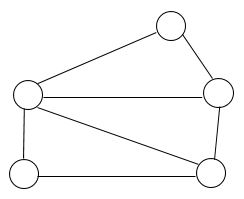
– relational
– hierarchical
+ network
28. Network DB assumes:
+ the presence of both vertical and horizontal hierarchical connections
– relationships between several tables
– relationships between data in the form of a tree
29. The most accurate analogue of a relational database:
+ two-dimensional table
– vector
– unordered data set
30. The table layout is:
+ description of table columns
– description of table rows
– general view of the table
Explore More IT Terms
#
A
- A Guide to SQL Query Formatting
- A/B testing
- Abstract Data Type (ADT)
- AES Encryption Algorithm: How It Works and Where It's Used
- Agile
- Algorithm
- Algorithm Analysis
- Algorithm Complexity
- Algorithm complexity: deep parsing O(log n)
- Algorithm vs. Program
- Algorithms and Data Structures in C#
- An overview of the C # programming language
- An overview of the Python programming language
- Anaconda Python
- Android
- Android App Bundle
- Android SDK
- Angular
- Ansible
- Apache
- Apache Airflow
- Apache Kafka
- Apache Tomcat
- App Store
- AppCode
- Applications of microcontrollers: From simple circuits in electronics to complex systems
- Applications of the derivative
- Arduino: How to Program It: Basics for Beginners
- Array-based stack
- ArrayList
- ASCII
- ASP.NET
- Assembly Language Lessons
B
C
D
- Data Analytics: applications of data analysis in companies
- Data Engineer - Who is it, what does a data engineer do, and an overview of the profession
- Data modeling: what it is, types, and process steps.
- Data preprocessing: a complete guide for beginners and professionals.
- Data structure
- Data Structures and Algorithms (DSA)
- Data types vs. Data structures
- Database Tests with Answers
- Deep Learning
- Defining Aliases
- Defining Arrays
- Deque
- Developing a Website from Scratch
- Differential Equations
- Differentiation of functions
- Digital data: understand the importance of this asset for businesses.
- Double integrals
- Doubly linked lists
- DSA Tutorial
E
F
G
H
- Handling errors and exceptions
- Heads or Tails? How Probability Theory Is Used in IT
- History of the development of computer science
- Homogeneous equations
- Homogeneous vs. non-homogeneous structures
- How to effectively organize your workflow
- How to Learn Java: Tips for Beginner Developers
- How to Learn PHP: A Beginner's Guide
- How to Use S3 Storage in Kubernetes with CSI
- HTML
- HTML and CSS: Definition, Application, and Operating Principles
- HTML and CSS. Layout from Scratch: What to Learn, Where to Learn, and How Long Will It Take?
- HTML Frame Structure
- HTML Link Formatting
I
- if..else construction
- Infinite sequences and series
- Information properties
- Inheritance in Java: A Complete Guide to Principles and Implementation
- Inserting an Image
- Integration of functions
- Interactive Python Tutorial – Learn Programming from Scratch
- Interpreter
- Interview Problem: Finding a Deleted Element in O(N)
- Interview Scare: The FizzBuzz Challenge
- Introduction to C++
- Introduction to Machine Learning
- Introduction to Networking | Network Fundamentals Part 1
- Introduction to Number Systems (Binary, Octal, Hexadecimal) | Math for CS Foundations #1
- IT Specialist Resume (CV)
J
K
L
M
- Machine Learning
- Machine Learning Basic Tool: NumPy
- Machine Learning Basic Tool: Pandas
- Machine Learning Mathematics
- Mathematics for programmers: what is really needed?
- MD5 encryption algorithm: What is it and why is it needed?
- Microcontroller and Microprocessor - what's the difference?
- ML Engineer: Who They Are, What They Do, How Much They Earn, and How to Become a Neural Network Specialist
- Monte Carlo Simulation: How It Works and What It's For
O
P
- PHP lessons
- Private DNS server and its configuration
- Program code
- Programmer's Dictionary
- Programming
- Programming with pseudocode
- Python Code Formatting Guide: PEP8
- Python for data analysis: how to do it and main libraries
- Python Lessons
- Python Superstar: 5 Ways to Use the * Operator
- Python vs. Julia: Should You Replace Python with Julia?
R
S
- SFML Graphics Library Tutorials
- Sorting Algorithms in Programming: Types, Descriptions, and Comparisons
- SQL commands: see what they are, what the main ones are + examples
- SQL Interview Questions and Tasks
- SQL Lessons
- SQL Stored Procedures
- SQL Syntactic Sugar: The COALESCE Function
- Stack
- Start in analytics: Python or R
- Static vs. dynamic data structures
- Statistical analysis: importance for decision making.
- String formatting in Python
- Structure of computer science
- Swift Lessons
- switch/match construct
- Syntax
T
- Terms in programming
- Text and paragraph formatting tags
- The concept of information and its transmission
- The Future of Python: Key Trends and Insights from Global Researc
- The Infrastructure of Code: A Complete Guide to Repositories for Languages, Frameworks, and Compilers
- The pip package manager in Python
- The role of informatization in the development of society
- Transfers
- Tutorials / Articles
- TypeScript: What It Is and Why Developers Need It
W
- What are databases, and why do they need DBMS and SQL?
- What do Linux distributions consist of?
- What is .NET and what is it used for?
- What is a data structure?
- What is a GPU in a computer, in simple terms?
- What is a quantum computer: 100,500 problems in one second
- What Is an Algorithm?
- What is Arduino: How it Works and the Platform's Capabilities
- What is Big Data? Introduction, Types, Characteristics, and Examples
- What is FizzBuzz Challenge?
- What is Golang and what is it used for?
- What is Haskell and what is it used for?
- What is Kotlin and what is it used for?
- What is Linux? The History of Linux
- What is machine learning, and how does it work?
- What is Power BI: everything about the data analytics software
- What is recursion, recursive and iterative process in programming?
- What is the C++ programming language?
- What is the OSI Model: A Complete Explanation of the Seven Layers and Their Role in Networking
- What's the difference between x86 and ARM processors?
- Where to start learning the C programming language?
- Which Linux distribution should you choose? A Linux distribution overview