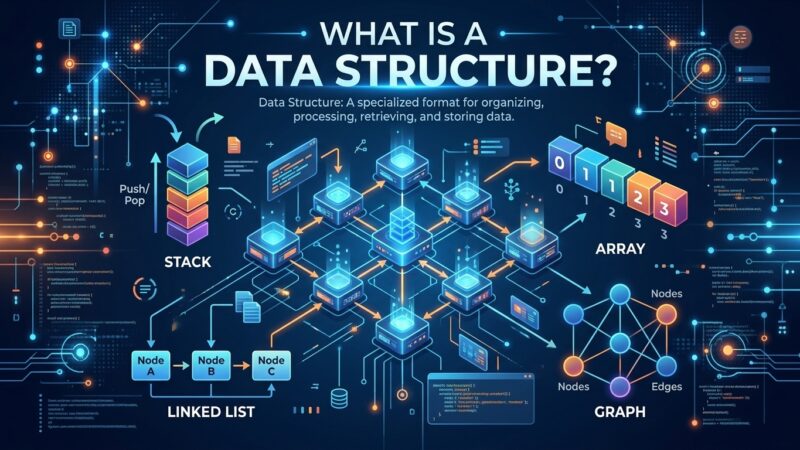
Abstract Data Type (ADT)
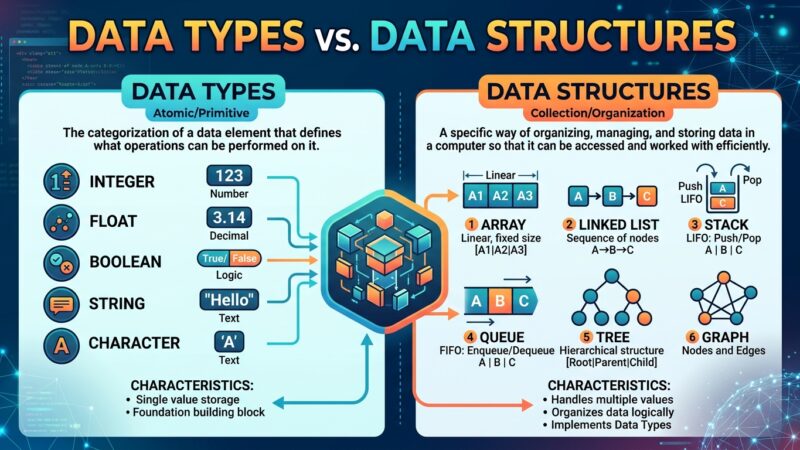
An Abstract Data Type (ADT) is a high-level mathematical model for data structures that defines what operations can be performed on the data rather than how those operations are implemented in code. It separates the interface from the implementation.
1. Definition of Abstract Data Types
An ADT is defined strictly by its behavior, operations, and constraints from the perspective of a user. It hides the underlying memory layout, dynamic pointers, or array structures behind a clean interface.
+--------------------------------------------------------+
|                     USER PROGRAM                       |
|   Calls methods: push(), pop(), insert(), search()     |
+--------------------------------------------------------+
                           |  (Interface / Contract)
                           v
+--------------------------------------------------------+
|                 ABSTRACT DATA TYPE (ADT)               |
|      Defines WHAT operations exist and their rules     |
+--------------------------------------------------------+
                           |  (Encapsulated Logic)
                           v
+--------------------------------------------------------+
|                 DATA STRUCTURE DESIGN                  |
|     Defines HOW data is stored (Arrays, Nodes, etc.)   |
+--------------------------------------------------------+
2. Main Categories and Types of ADTs
ADTs are broadly classified into two categories based on how elements are organized sequentially or hierarchically:
Linear ADTs
List ADT: Sequentially ordered elements with positional access (e.g., Array, Linked List).
Stack ADT: Last-In, First-Out (LIFO) access pattern.
Queue ADT: First-In, First-Out (FIFO) access pattern.
Deque ADT: Double-ended queue allowing insertion/deletion at both ends.
Non-Linear ADTs
Tree ADT: Hierarchical structure with parent-child relationships (e.g., Binary Tree, BST).
Graph ADT: Collection of vertices connected by edges representing networks.
Set ADT: Collection of unique, unordered elements.
Map / Dictionary ADT: Key-value pairs allowing fast lookup by unique keys.
3. Visual Models of Key ADTs
4. Detailed Breakdown of Core ADTs
A. Stack ADT (LIFO)
Detailed Description: Elements are added and removed from the same end (the “top”). Accessing elements in the middle requires popping elements above them first.
Core Operations:
push(x),pop(),peek(),isEmpty()
Code Implementations
C++ Implementation
#include <iostream>
#include <vector>

template <typename T>
class Stack {
private:
    std::vector<T> elements;
public:
    void push(T val) { elements.push_back(val); }
    void pop() {
        if(!isEmpty()) elements.pop_back();
    }
    T top() { return elements.back(); }
    bool isEmpty() { return elements.empty(); }
};
Python Implementation
class Stack:
    def __init__(self):
        self._items = []

    def push(self, item):
        self._items.append(item)

    def pop(self):
        return self._items.pop() if not self.is_empty() else None

    def peek(self):
        return self._items[-1] if not self.is_empty() else None

    def is_empty(self):
        return len(self._items) == 0
Java Implementation
import java.util.ArrayList;

public class StackADT<T> {
    private ArrayList<T> list = new ArrayList<>();

    public void push(T item) { list.add(item); }
    public T pop() {
        return list.isEmpty() ? null : list.remove(list.size() - 1);
    }
    public T peek() {
        return list.isEmpty() ? null : list.get(list.size() - 1);
    }
    public boolean isEmpty() { return list.isEmpty(); }
}
B. Queue ADT (FIFO)
Detailed Description: Elements enter at the “rear” (enqueue) and leave at the “front” (dequeue), mimicking a physical waiting line.
Core Operations:
enqueue(x),dequeue(),front(),isEmpty()
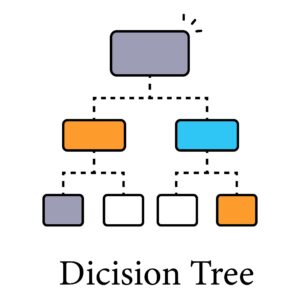
C. Tree ADT
Detailed Description: A non-linear hierarchy consisting of a root node and child nodes linked recursively.
D. Graph ADT
Detailed Description: Represents network connections using a set of vertices and edges. It can be directed or undirected, weighted or unweighted.
5. Advantages and Disadvantages
6. Real-World Applications
Stack ADT:
Function Call Stack: Manages active functions, local variables, and return addresses in compiler execution environments.
Undo/Redo Mechanisms: Powers history buffers in text editors and graphics applications.
Queue ADT:
Task Scheduling: CPU process queues, printer print jobs, and asynchronous event loops.
Web Servers: Buffering incoming HTTP requests during traffic spikes.
Tree ADT:
File Systems: Directory structures in operating systems (e.g.,
/usr/bin).Database Indexing: B-Trees and B+ Trees for high-speed disk reads.
Graph ADT:
Navigation Systems: GPS pathfinding using Dijkstra’s algorithm on road networks.
Social Networks: Modeling relationships and recommendation engines (e.g., LinkedIn connections).
Conclusion
Abstract Data Types provide the theoretical framework for modern software design. By separating what operations must be supported from how data is stored in memory, ADTs enable modular code architectures, clean interface design, and flexible implementation swapping in production software.
Explore More IT Terms
#
A
- A Guide to SQL Query Formatting
- A/B testing
- Abstract Data Type (ADT)
- AES Encryption Algorithm: How It Works and Where It's Used
- Agile
- Algorithm
- Algorithm Complexity
- Algorithm vs. Program
- Algorithms and Data Structures in C#
- An overview of the C # programming language
- An overview of the Python programming language
- Anaconda Python
- Android
- Android App Bundle
- Android SDK
- Angular
- Ansible
- Apache
- Apache Airflow
- Apache Kafka
- Apache Tomcat
- App Store
- AppCode
- Applications of microcontrollers: From simple circuits in electronics to complex systems
- Applications of the derivative
- Arduino: How to Program It: Basics for Beginners
- Array-based stack
- ArrayList
- ASCII
- ASP.NET
- Assembly Language Lessons
B
C
D
- Data Analytics: applications of data analysis in companies
- Data Engineer - Who is it, what does a data engineer do, and an overview of the profession
- Data modeling: what it is, types, and process steps.
- Data preprocessing: a complete guide for beginners and professionals.
- Data structure
- Data Structures and Algorithms (DSA)
- Data types vs. Data structures
- Database Tests with Answers
- Deep Learning
- Defining Aliases
- Defining Arrays
- Deque
- Developing a Website from Scratch
- Differential Equations
- Differentiation of functions
- Digital data: understand the importance of this asset for businesses.
- Double integrals
- Doubly linked lists
- DSA Tutorial
E
F
H
- Handling errors and exceptions
- Heads or Tails? How Probability Theory Is Used in IT
- History of the development of computer science
- Homogeneous equations
- How to effectively organize your workflow
- How to Learn Java: Tips for Beginner Developers
- How to Learn PHP: A Beginner's Guide
- How to Use S3 Storage in Kubernetes with CSI
- HTML
- HTML and CSS: Definition, Application, and Operating Principles
- HTML and CSS. Layout from Scratch: What to Learn, Where to Learn, and How Long Will It Take?
- HTML Frame Structure
- HTML Link Formatting
I
- if..else construction
- Infinite sequences and series
- Information properties
- Inheritance in Java: A Complete Guide to Principles and Implementation
- Inserting an Image
- Integration of functions
- Interactive Python Tutorial – Learn Programming from Scratch
- Interpreter
- Interview Problem: Finding a Deleted Element in O(N)
- Interview Scare: The FizzBuzz Challenge
- Introduction to C++
- Introduction to Machine Learning
- Introduction to Networking | Network Fundamentals Part 1
- Introduction to Number Systems (Binary, Octal, Hexadecimal) | Math for CS Foundations #1
- IT Specialist Resume (CV)
J
K
L
M
- Machine Learning
- Machine Learning Basic Tool: NumPy
- Machine Learning Basic Tool: Pandas
- Machine Learning Mathematics
- Mathematics for programmers: what is really needed?
- MD5 encryption algorithm: What is it and why is it needed?
- Microcontroller and Microprocessor - what's the difference?
- ML Engineer: Who They Are, What They Do, How Much They Earn, and How to Become a Neural Network Specialist
- Monte Carlo Simulation: How It Works and What It's For
O
P
- PHP lessons
- Private DNS server and its configuration
- Program code
- Programmer's Dictionary
- Programming
- Programming with pseudocode
- Python Code Formatting Guide: PEP8
- Python for data analysis: how to do it and main libraries
- Python Lessons
- Python Superstar: 5 Ways to Use the * Operator
- Python vs. Julia: Should You Replace Python with Julia?
R
S
- SFML Graphics Library Tutorials
- Sorting Algorithms in Programming: Types, Descriptions, and Comparisons
- SQL commands: see what they are, what the main ones are + examples
- SQL Interview Questions and Tasks
- SQL Lessons
- SQL Stored Procedures
- SQL Syntactic Sugar: The COALESCE Function
- Stack
- Start in analytics: Python or R
- Statistical analysis: importance for decision making.
- String formatting in Python
- Structure of computer science
- Swift Lessons
- switch/match construct
- Syntax
T
- Terms in programming
- Text and paragraph formatting tags
- The concept of information and its transmission
- The Future of Python: Key Trends and Insights from Global Researc
- The Infrastructure of Code: A Complete Guide to Repositories for Languages, Frameworks, and Compilers
- The pip package manager in Python
- The role of informatization in the development of society
- Transfers
- Tutorials / Articles
- TypeScript: What It Is and Why Developers Need It
W
- What are databases, and why do they need DBMS and SQL?
- What do Linux distributions consist of?
- What is .NET and what is it used for?
- What is a data structure?
- What is a GPU in a computer, in simple terms?
- What is a quantum computer: 100,500 problems in one second
- What Is an Algorithm?
- What is Arduino: How it Works and the Platform's Capabilities
- What is Big Data? Introduction, Types, Characteristics, and Examples
- What is FizzBuzz Challenge?
- What is Golang and what is it used for?
- What is Haskell and what is it used for?
- What is Kotlin and what is it used for?
- What is Linux? The History of Linux
- What is machine learning, and how does it work?
- What is Power BI: everything about the data analytics software
- What is the C++ programming language?
- What is the OSI Model: A Complete Explanation of the Seven Layers and Their Role in Networking
- What's the difference between x86 and ARM processors?
- Where to start learning the C programming language?
- Which Linux distribution should you choose? A Linux distribution overview