
History Of Differential Equations
Differential equations are a branch of mathematics that studies the theory and methods of solving equations containing the unknown function and its derivatives of various orders of one argument (ordinary differential equations) or several arguments (partial differential equations). Differential equations are widely used in practice, particularly to describe transient processes.
The theory of differential equations is a branch of mathematics that studies differential equations and related problems. Their results are used in many natural sciences, especially in physics.
Simply put, a differential equation is an equation in which the unknown variable is a function. Moreover, the equation itself involves not only the unknown function but also its various derivatives. A differential equation describes the relationship between the unknown function and its derivatives. Such relationships are found in various fields of knowledge: mechanics, physics, chemistry, biology, economics, etc.
A distinction is made between ordinary differential equations and partial differential equations. Integro-differential equations are more complex.
Initially, differential equations arose from problems in mechanics involving the coordinates of bodies, their velocities, and accelerations, considered as functions of time.
A differential equation is said to be integrable in quadratures if the problem of finding all the solutions of constraints can be reduced to calculating a finite number of integrals of known functions and simple algebraic operations.
History
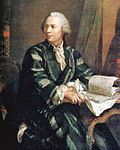
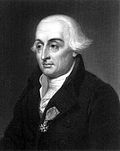
Leonhard Euler, Joseph-Louis Lagrange. Differential equations were invented by Newton (1642-1727). Newton considered this invention so important that he encrypted it as an anagram, the meaning of which can be freely conveyed in modern terms as follows: “the laws of nature are expressed by differential equations.” Newton’s main analytical achievement was the expansion of all possible functions into power series (the meaning of Newton’s second, longest anagram is that to solve any equation, one must substitute the series into the equation and equate terms of the same degree). Of particular significance here was Newton’s binomial theorem formula, which he discovered (not only with integer exponents, for which Viète (1540-1603) knew the formula, but also, most importantly, with fractional and negative exponents). Newton expanded all the basic elementary functions into “Taylor series.” This, together with his table of primitive functions (which has been passed on almost unchanged to modern analysis textbooks), allowed him, in his words, to compare the areas of any figures “in half a quarter of an hour.”
Newton pointed out that the coefficients of his series are proportional to the successive derivatives of the function, but he did not elaborate on this, since he rightly believed that all calculations in analysis are more conveniently performed not by repeated differentiations, but by calculating the first terms of the series. For Newton, the relationship between the coefficients of a series and its derivatives was more a means of calculating derivatives than a means of compiling a series. One of Newton’s most important achievements is his theory of the solar system, set out in the “Mathematical Principles of Natural Philosophy” (“Principia”) without the aid of mathematical analysis. It is commonly believed that Newton discovered the law of universal gravitation through his analysis. In fact, Newton (1680) is credited only with proving the ellipticity of orbits in a gravitational field according to the inverse-square law: this law itself was pointed out to Newton by Hooke (1635-1703) and, perhaps, was also discerned by several other scientists.
Pierre-Simon Laplace
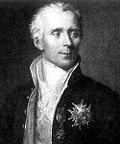
Among the vast number of 18th-century works on differential equations, the works of Euler (1707-1783) and Lagrange (1736-1813) stand out. These works first developed the theory of small oscillations, and consequently the theory of linear systems of differential equations; along the way, the basic concepts of linear algebra (eigenvalues and eigenvectors in the n-dimensional case) emerged. The characteristic equation of a linear operator was long called secular, since it is from such an equation that secular (age-related, i.e., slow compared to annual motion) perturbations of planetary orbits are determined according to Lagrange’s theory of small oscillations. Following Newton, Laplace, and Lagrange, and later Gauss (1777-1855), also developed methods of perturbation theory.
Joseph Liouville
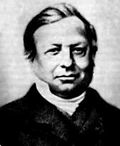
When the unsolvability of algebraic equations by radicals was proven, Joseph Liouville (1809-1882) constructed a similar theory for differential equations, establishing the impossibility of solving several equations (in particular, such classical ones as second-order linear equations) in elementary functions and quadratures. Later, Sophus Lie (1842-1899), analyzing the problem of integrating equations by quadratures, came to the need to study in detail groups of dipheomorphisms (later called Lie groups) – thus, in the theory of differential equations, one of the most fruitful areas of modern mathematics arose, the further development of which was closely connected with completely different questions (Lie algebras were considered even earlier by Siméon-Denis Poisson (1781-1840) and, especially, Carl Gustav Jacob Jacobi (1804-1851)).
Henri Poincaré
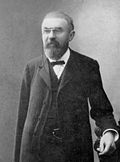
A new stage in the development of the theory of differential equations began with the work of Henri Poincaré (1854-1912). His “qualitative theory of differential equations,” along with the theory of functions of complex variables, led to the foundation of modern topology. The qualitative theory of differential equations, or, as it is now more commonly called, the theory of dynamical systems, is currently developing most actively and has the most important applications of the theory of differential equations in the natural sciences.